Category: Non-fiction
-
Babylon to Chorleywood in thirty-two pages

Oxford University Press’s Very Short Introduction series has staked out a territory for concise introductions to a bewildering variety of topics, but for brevity they are no match for a series which will be familiar to many (if they are the right age) from museum shops across the British Isles—the…
-
Beautiful movement

Running has been a part of me since I was in my early twenties—not competitive running, but thrashing along rural footpaths in all weathers, just me and the world in physical communion. At one stage in my life my obsession with it made me extremely fit and lean, but through…
-
Sweet reasonableness

Having had occasion to excavate some of my East Anglian roots in response to watching The Dig recently, I was well-primed to receive some insights into the history of my family in Norfolk, courtesy of my cousin Simon Gooch. His slim biography of Edwin Gooch is a fascinating account of…
-
Sharing

Rachel Roddy’s second book is full of anecdotes and recollections, little narrative vignettes about her immediate household, the extended Sicilian family she’s married into, her English parents, the people from whom she buys food in Rome and Sicily, people she cooks with, and so on. I don’t go a bundle…
-
A book to sort you out apiece

A viral disease is sweeping the world, killing indiscriminately. Well, nearly. Its fatal impact is concentrated in a particular minority, one that many in society seem to regard as expendable, as less valuable than the average. At least in the ongoing coronavirus pandemic, it’s socially unacceptable to vilify older people…
-
For Pete’s sake!

In 1983 or 1984, I had a good look around Charles Jencks’s Thematic House, then recently completed. It is now the only Grade I listed building in the Ladbroke Conservation Area in Kensington, owing to its unique importance as an early example of Postmodern architecture. I was given a thorough…
-
Food as illustration
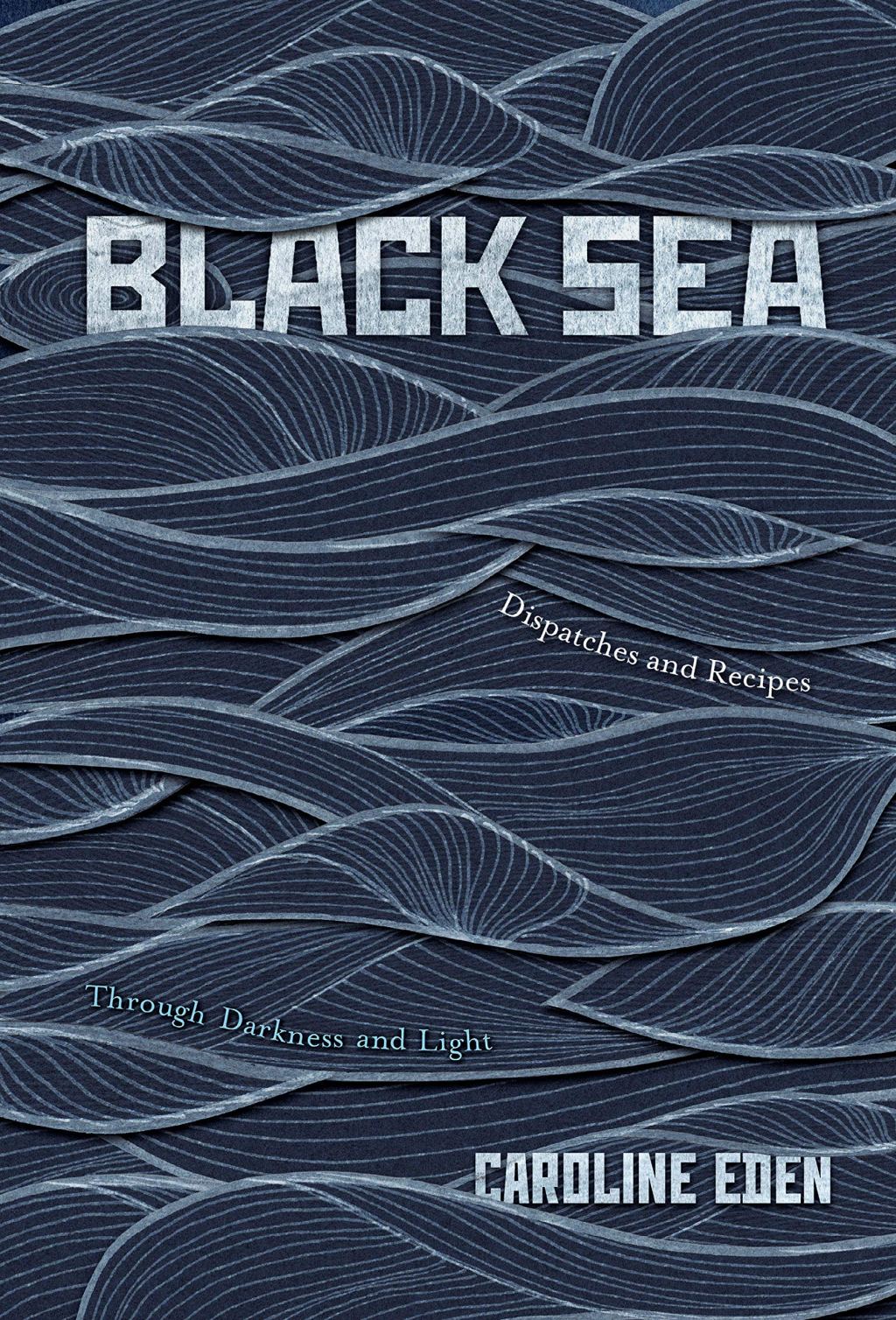
In Western Europe we take holidays on the Mediterranean, we hear about migrants attempting to cross it, we imagine our histories as entwined with it—the cradle of a Roman Empire that impinged on the continent’s most distant fringes, bringing olives, wine, and dozens of other markers of its cultures and…
-
Tilting at reality

I’ve read a lot of popular science books over the years, but never until now have I felt a real urge to go and learn the maths I’d need to properly understand the work. I feel as though, if I had read this book twenty, or even ten years ago,…
-
Veils of allusion

Iain Sinclair walks London’s sacred geometries, pursuing a dérive that moves obliquely across the familiar, prosaic territories of the city. Or he consecrates the geometries of his walking. Or he territorialises a sacred ambulation. This triangle, of place, movement and meaning, is the tripod on which these two short books…
-
Other truths in the shadows

I got stressed out reading Logicomix. About halfway through the book there is a discussion of Russell’s paradox, a self-contradictory proposition in set theory. Very simply, it posits a set of all sets that do not contain themselves. At the time he stumbled upon it Bertrand Russell, whose biography Logicomix…
-
A pamphlet in disguise

A book is illustrated if it has pictures in it. A history is illustrated if the events it constructs are shown in the pictures that accompany it. Admittedly not everyone will sign up to my definitions, but I’m not too convinced that Portraits of Violence fits the second of them.…
-
A life lived in the kitchen

I don’t come from anywhere in particular. I’m a Turkish jew with an Italian name on my father’s side, and I’m a characteristically rootless kind of middle-class English on my mother’s, with bits of Norfolk, West-Country, Kent, Wales and whatever-else in the family histories that precede my arrival in a…
-
Same difference

How To Be Autistic is an important book. There are, I imagine, countless books about autism: medical books, popular science books, memoirs of the parents of autistic children, heart-warming novels about cognitively impaired savants (think of the Barry Levinson film Rain Man), and so on. Since the word autismus was…
-
The primacy of the useless

For much of my life I have done ‘nothing’, and for almost all of it I have resisted or involuntarily recoiled from the ‘somethings’ that I was supposed to do. At school I was horrified by the expectations of teaching staff and my peers alike, and to this day I…
 Oliver Arditi