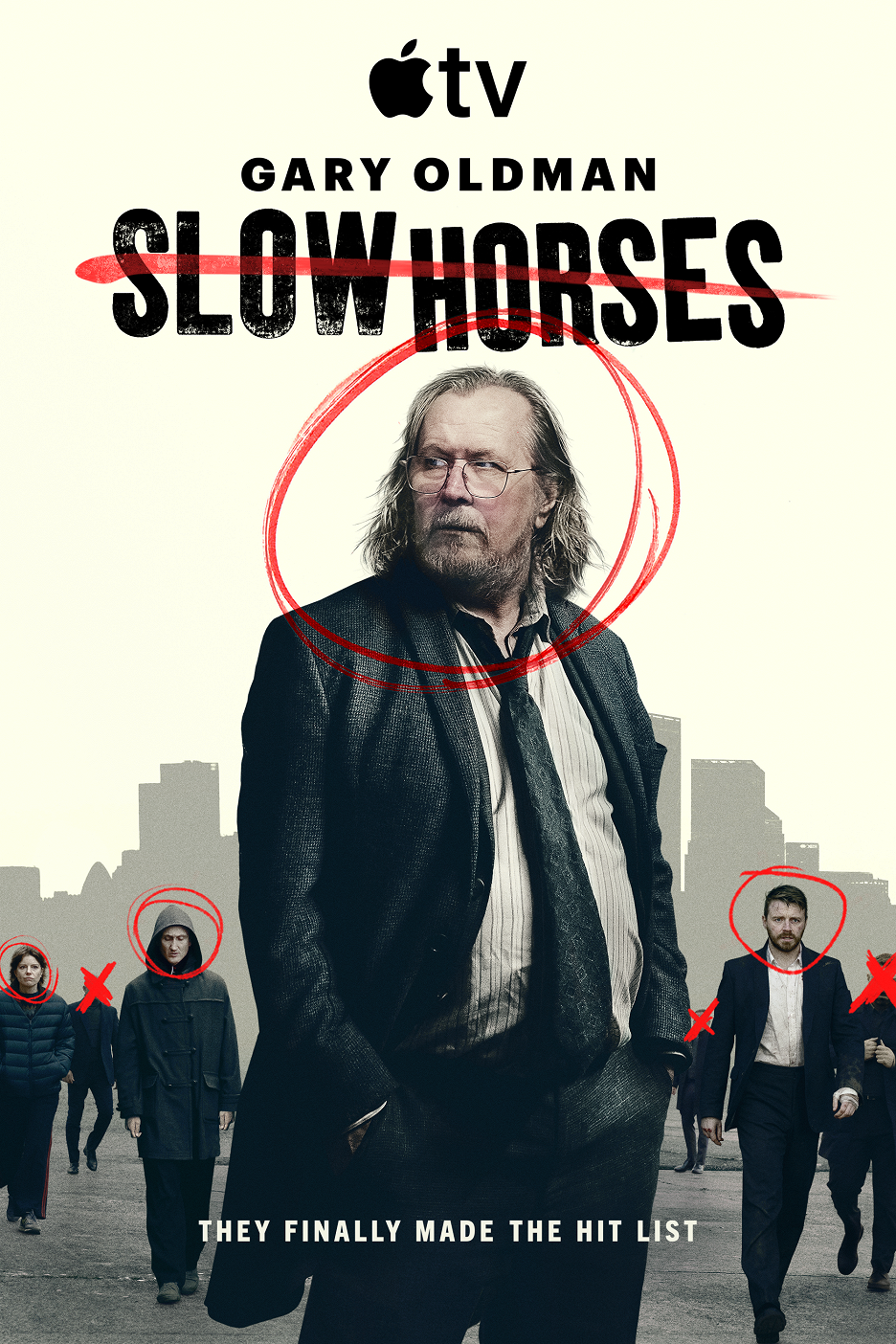
TV franchises about dysfunctional teams usually pull their punches. Slow horses rarely does. Gary Cox’s delightfully misanthropic Jackson Lamb tends to come out looking smart – in fact he’s usually the only character who knows what’s going on – but his ‘Joes’, the second-string MI5 agents that work for him, are some combination of incompetent, venal, self-deluding or pathological. Most series will settle into some kind of a status quo after five seasons, and I guess Slow horses has, in that you can predict a generally tense, unpleasant, and potentially lethal time for the central characters, but there’s novelty in season six as well. This time out someone is killing ex-horses, and trying to kill the current ones. Exactly who and why is unclear, and it’s the gradual unravelling of that mystery that structures this season. The meat on the bones, though, is the superb writing and acting, and the uncomfortably plausible interactions of a group of characters that are in each other’s company only because they have no choice.
We have Cartwright, the dim posh boy who should be a hero if only this were a world in which heroes existed; Standish, the conflicted, ‘nice’ PA in recovery from alcoholism, perpetually disappointed by the world; Coe, unhinged and violent, too asocial to work anywhere else; Ho, the delusional, narcissistic, slimy and despicable IT prodigy; Dander, the furious, nihilistic addict; Louisa, the one who got out, whose contempt for her ex-colleagues is matched only by her ambition; Harkness, Cartwright’s estranged father who acts as a recurring antagonist to the team, played with wonderful malice by Hugo Weaving. We have more, but you get the idea. Each character is sufficiently individual to read plausibly, although the overall setup is not even trying to be realistic.
Mick Herron, who wrote the books, didn’t research the intelligence services, he just started making it up off the top of his head. It turns out that if you do that, but you imagine a world in which people are supremely fallible and self-serving, in which the security apparatus is inherently corrupt, in which heroism is rewarded with failure, and success with disregard, then it’s quite easy to believe in. It’s a joy, for some weird reason, to watch these carefully crafted misfits suffering, failing and dying while their boss sneers at their shortcomings, and pulls just enough of their fat out of the fire to allow for a continuation of the story. The story is orchestrated with great control, well-modulated narrative tension, and impeccable pacing. No spoilers, but by the end of this season not everyone is dead, those that aren’t are considerably less happy (excepting the phlegmatic Lamb), and I’m immensely entertained.


Leave a Reply