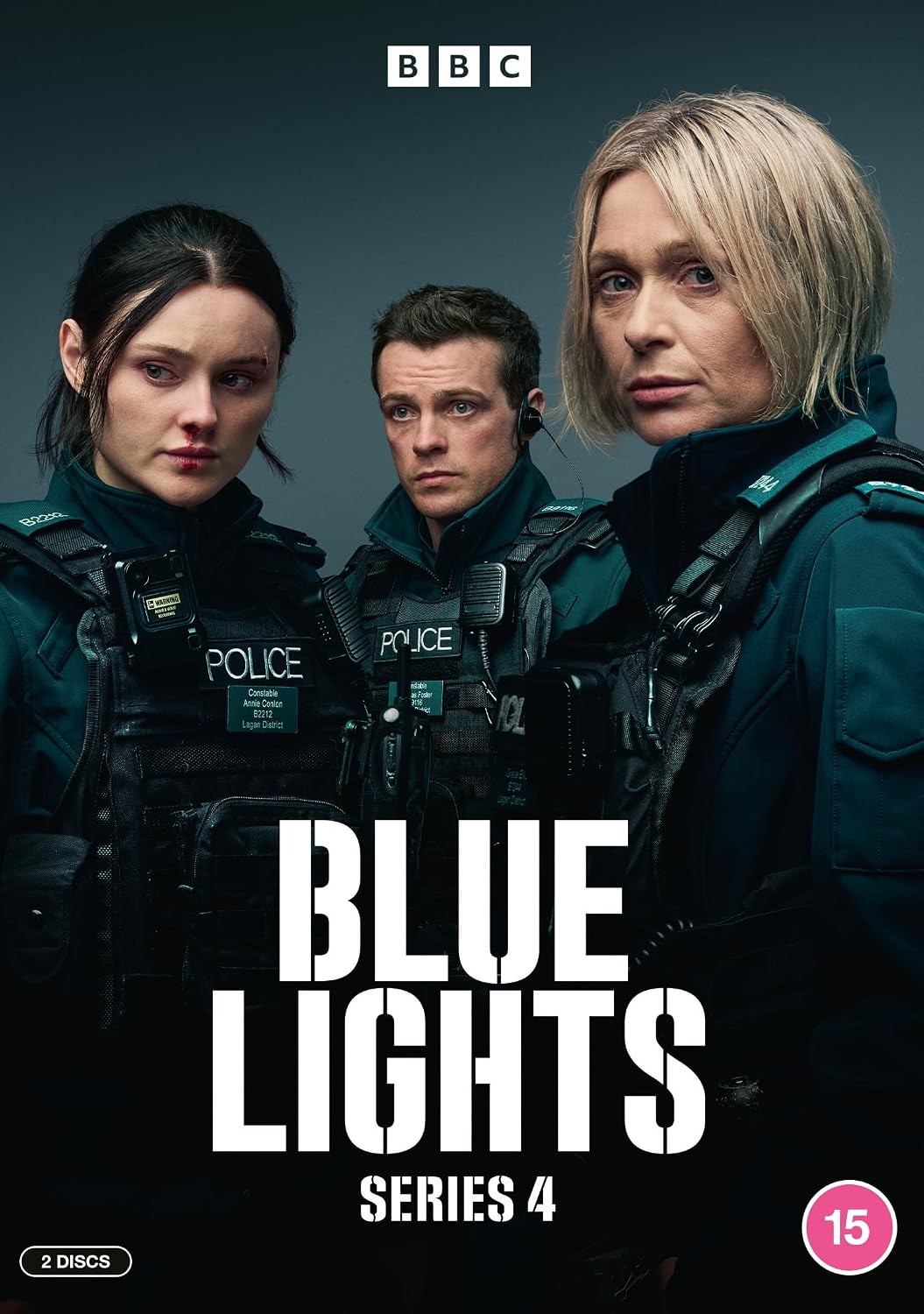
TV shows about the police are a very well-worn genre now, and often seem to inhabit a completely different universe from anyone’s actual experience of police work, positive or negative, as a lay-person or an insider. Their tropes and conventions are so deeply entrenched that it’s almost impossible to see past them, or conversely to even notice them, so conditioned are we as viewers to take them as the ground bass for whatever story the show-runners want to tell. This makes them ideal for satire, as in a show like Brooklyn Nine-Nine, and equally ripe for a dramatic take-down, as journalist turned screenwriter David Simon did in Homicide: life on the street and then more comprehensively in The Wire. Blue lights never completely abandoned the commercially appealing tropes of the genre, but right from the off it tried to offer a plausible account of the working lives of ordinary police officers in post-Troubles Northern Ireland. I have no way of knowing how close to the target it got, but it clearly tries very hard to be even-handed. The police characters are well-intentioned, and they’re all meant to have our sympathy in one way or another, but so are those on the other side – the criminals, sectarian activists, and even the representatives of international cartels are given some kind of inner life. The viewer is meant to think, to see the moral ambiguities of Northern Irish political reality, and to understand the impossibility of easy answers.
This is very much an entertainment product, however – and leans into that more explicitly than something like The Wire. What people want from an ensemble-cast TV drama is a selection of characters and stories they can relate to. Blue lights provides a full complement of workplace romance, quirky personalities, baked goods and family drama, but it manages to do so without compromising on its ostensible subject matter. One suspects a realistic show might be unremittingly stressful and depressing to watch, like Tony Schumacher’s The Responder (starring Martin Freeman). Season 4 of Blue lights has satisfying narrative contours (which are pretty much incompatible with realism for a start), and skilfully managed character arcs. The detail of the writing is excellent, as are the cast performances, and that’s really the show’s greatest strength. With a backbone of strong multi-perspective storytelling, you can hang quite a lot of polemic or enquiry on a story before it starts to sag under the weight. In this set of six episodes Angela Griffin and Sam O’Mahony strike a palatable balance. I’m sure that more politicised viewers in Northern Island (on either side of the peace lines) may struggle with the show’s lack of position, but if it has a point to make it’s this: all of these people are people. That’s not a bad contribution to public discourse. Without dropping any spoilers, this feels like the end of the series, and the creators Declan Lawn and Adam Patterson have announced their departure. I’m sure there’s a market for more, as it features some nicely drawn characters here, but if I’m honest it’s not clear how much further this show could go without either devolving into a trope-fest, or losing its precarious balance at the mid-point of a still divided society. Season 4 puts an extremely watchable cap on a genuinely novel contribution to the genre.


Leave a Reply