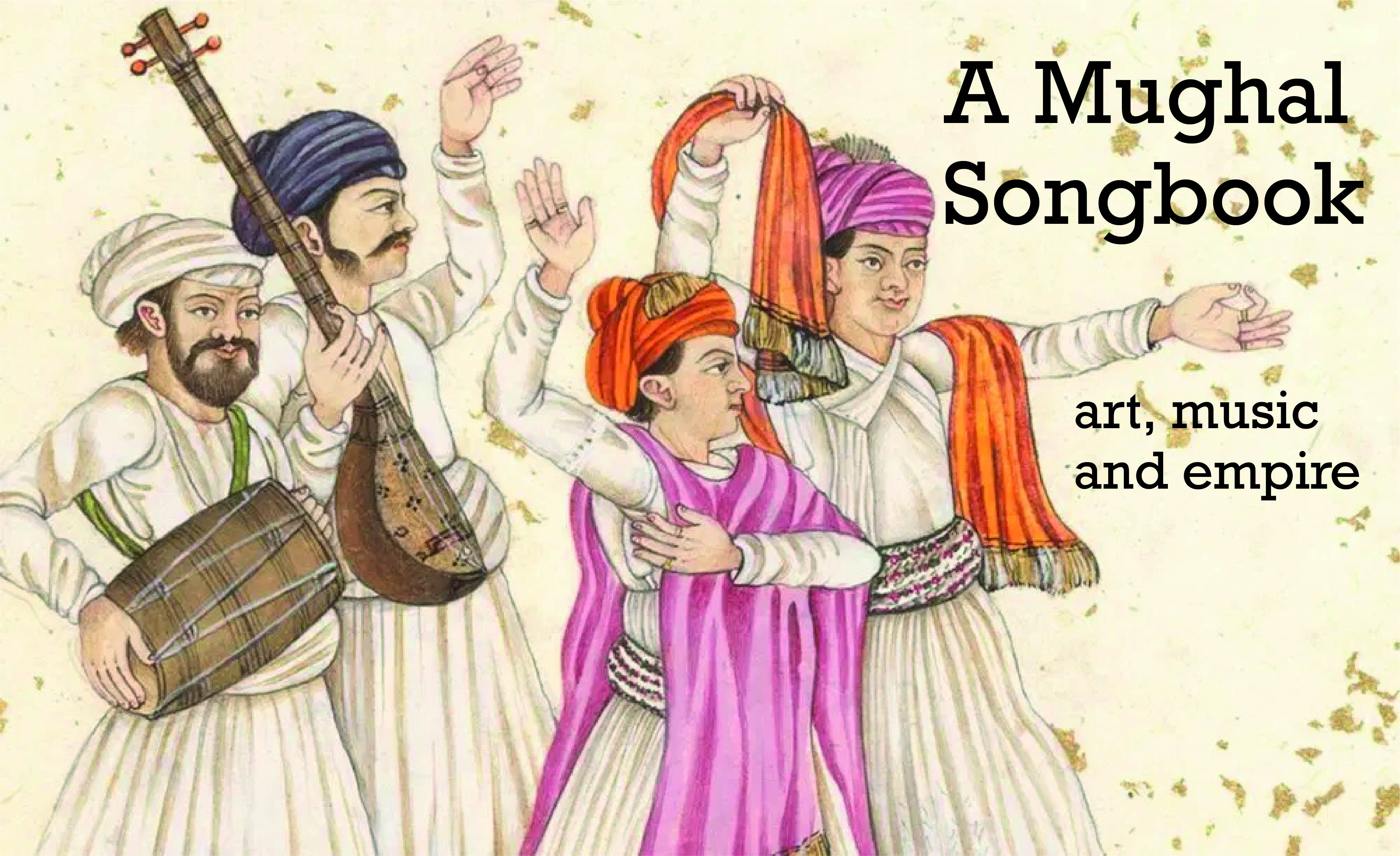
Taking the new stairs in Cambridge’s Fitzwilliam Museum, the only way to reach the main galleries rather than the temporary exhibition space is through the Shiba Room, a small space fitted with specialist display facilities, and usually employed to highlight particular facets of the Fitzwilliam’s extensive collections. Cutting through with Parent in search of some seventeenth-century paintings, I was halted in my tracks. The current display shows pages from a manuscript compiled by a wealthy Englishwoman, Sophia Elizabeth Plowden, in eighteenth-century Lucknow, in which she commissioned the recording of the words and music from a number of ‘HIndustani airs’. This is interesting in and of itself, but what stopped me was the incredibly intricate illumination and illustration work that decorates the pages. Most of the pages on display are of lyrics, in beautiful nastaliq calligraphy (Persian written in the Arabic alphabet), on which each verse is presented like an objet d’art with an expanse of space around it, often a lively illustration, and a broad border filled with tiny hand drawn floral motifs and gold leaf. There are also some supporting objects and other illustrations. Together they offer a window into what sounds like an extraordinary world, a vibrant and brief cultural scene that flourished as the Mughal Empire broke up, leading to the dispersal of artists, writers and musicians to regional centres, at just the time that Europeans began to be present in large numbers. Centres of political power were also centres of artistic patronage, with some rulers also practicing as poets. We’re looking into the Islamic world, but it’s far from the puritanical domain that many would imagine – sexual love is a frequent topic of the songs and the illustrations, and many of the women in the pictures are courtesans with their breasts exposed or thinly veiled. The airs collected by Plowden and others, most famously the Irish musician William Hamilton Bird, were widely disseminated and performed on the harpsichord – an album of these harpsichord arrangements plays in the room as you look round. There’s clearly enough in this milieu to warrant a huge exhibition and a great many books, but this one room is an absolutely beautiful starting place.


Leave a Reply