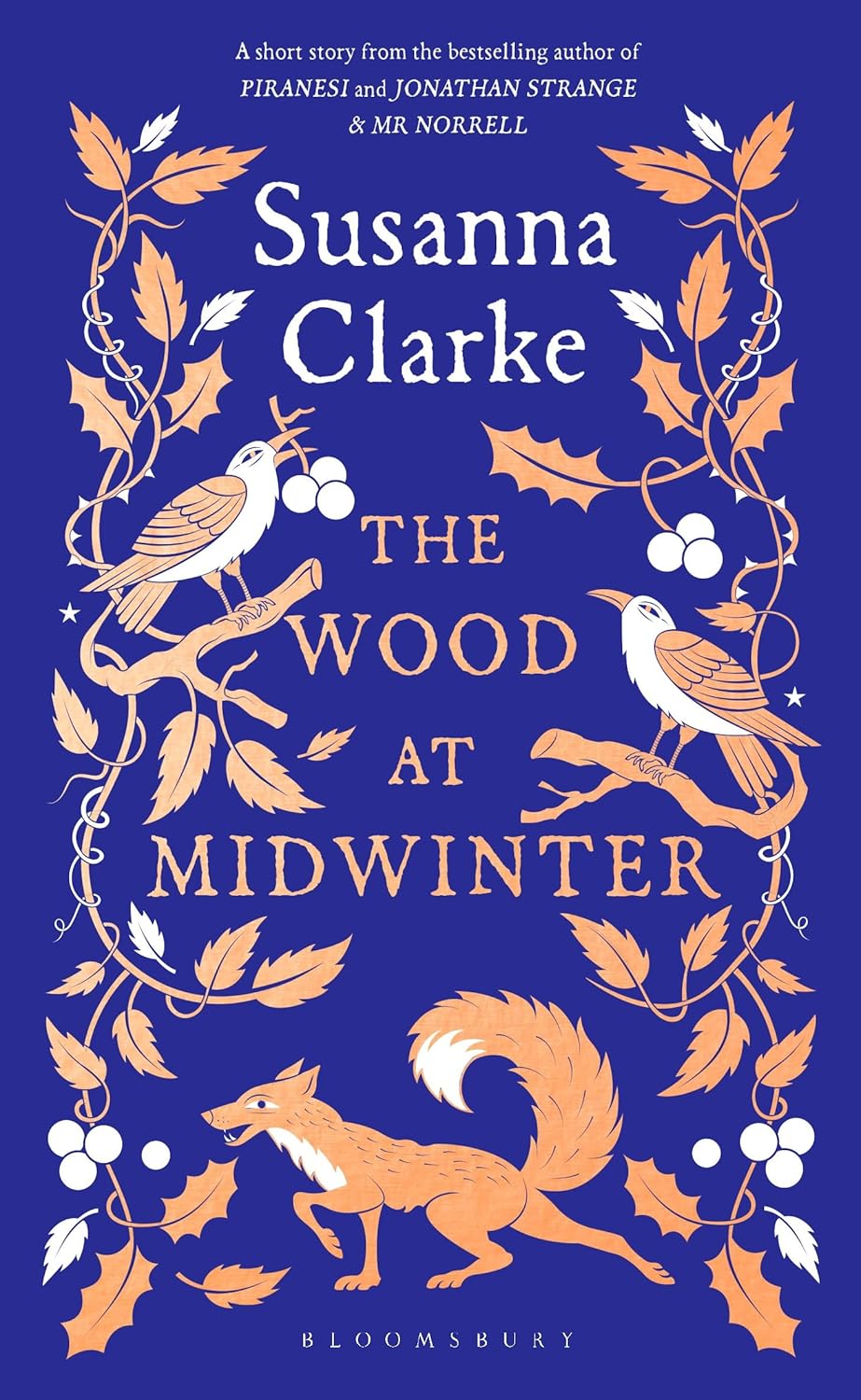
Winter’s a poem, like all the seasons. It speaks itself into us in a language of sensation and anticipated nostalgia. Returning so reliably as it does each year, it reminds us that its repetitions are limited, and that we’ll only see so many of them. It’s a rhythm that provokes many different responses, and despite the damp, quiet misery that winter means in practice for so many of us in the Palearctic, we often associate it with the warmth of feasting that enlivens its depths, and the rekindling of the summer’s warmth at the fulcrum of the Solstice. We think less of the discomfort of the weather than we do about how cozy we make ourselves indoors. Susanna Clarke’s short story The Wood at midwinter plays on that homely warmth, but it portrays something less comfortable than roasting chestnuts or invigorating walks through the snow.
It’s a fable, a tale of talking animals and symbolic relations, but its moral is less obvious than anything in Aesop. It’s presented in a slim hardcover book, accompanied by lovely, gestural ink-wash illustrations by Victoria Sawdon, and clearly intended as fodder for the Christmas market, but it feels right that it’s in a volume of its own – it’s a substantial, thought provoking piece, however concise. Something so short is very easy to spoil, so I won’t say anything about the characters or the plot, but the themes are ones that feel very important to me. It asks questions about difference. Why is it important? What does it cost both those who embrace it, and those around them? What do we gain if we do embrace it? How can it be understood by those that don’t? And while it doesn’t offer any straightforward answers, it makes it very clear that difference is something valuable in and of itself. It does so with simple juxtapositions and unsettling caesuras. Most of all, it does it beautifully.


Leave a comment