Category: Fiction
-
Representing
This third and final part of Kim Stanley Robinson’s Science In The Capital series maintains the very consistent tone established in its predecessors. It is a low-key account of the onset of ecological crisis, and of the responses made by a group of scientists, science policy wonks, and politicians, largely…
-
A shotgun blast of flawed brilliance
Seveneves is Neal Stephenson in his pomp. This book combines all his most splendid qualities as a writer: his febrile inventiveness, his meticulous technical research, his appealing and idiosyncratic characters, his fabulously convoluted plotting, and his exemplary pacing of event and revelation. It’s a gripping a thriller, an intellectual riot,…
-
Necessary questions

Fifty Degrees Below takes over more or less exactly where Forty Signs Of Rain leaves off, but it shifts focus slightly, both in terms of which of its characters are given the most time, and in the way it examines the impacts of climate change. This time, we are still…
-
Deniable plausibility

I’ve been on a mission recently to catch up with the output of two of my favourite writers, Kim Stanley Robinson and Neal Stephenson. With Termination Shock, Stephenson makes a foray into territory more usually to be associated with Robinson—which is to say that the book is a piece of…
-
Action stations

Kim Stanley Robinson keeps coming back to what might be described as ‘environmental fiction’, and ecological themes are never far from the surface even in his more fanciful SF writing, but I would guess that it was his Science In The Capital series that put him on the map as…
-
A world of experience

I’m not too sure why it’s taken me so long to get around to reading Hilary Mantel’s novels about the life of Thomas Cromwell—I probably found the whole award-winning thing a bit off-putting, as I have a variety of reservations about prizes and awards. I do know, however, a lot…
-
An orrery of thought
Having finished reading Neal Stephenson’s epic historical trilogy The Baroque Cycle it’s quite hard, on reflection, to recall everything that’s in it. It has to be one of the densest, most detailed, and most complex works of fiction I’ve ever read. It is also really a single novel, although each…
-
Hardy perennials

Kim Stanley Robinson is known for not writing stories about soldiers, or other stereotypically heroic figures—which in our deeply fucked-up cultures are almost always the purveyors of violence. Instead he writes about scientists, administrators, politicians, activists, engineers, labourers, artists, writers, craftspeople, and so on. The kind of characters that seem…
-
Central admixture

Having recently read and written about Quicksilver, the book which precedes The Confusion in Neal Stephenson’s Baroque Cycle trilogy, there’s relatively little that I feel compelled to commit to my journal in respect of the The Confusion. To say it contains ‘more of the same’ sounds dismissive, but that’s essentially…
-
Light touch, heavy themes
I inhabit a timeline in which the definitive version of Michael Moorcock’s huge fantasy sequence is The Tale of The Eternal Champion, available in your version of reality only in second-hand copies which sometimes slip between the parallels and turn up for sale in independent bookshops (or on Amazon). In…
-
Everything happens only once
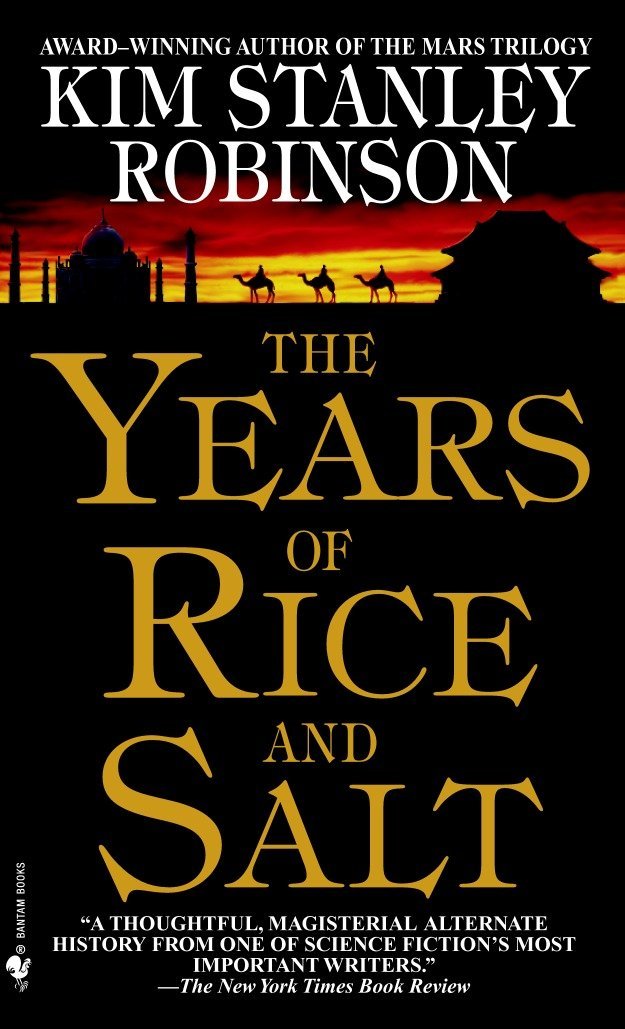
My exploration of Kim Stanley Robinson’s oeuvre is proceeding in a kind of pincer movement, reading books alternately from either end of his writing career, and closing in on the midpoint. I didn’t start right at the beginning, having read several of his earlier novels already, but with Antarctica, published…
-
A work of play
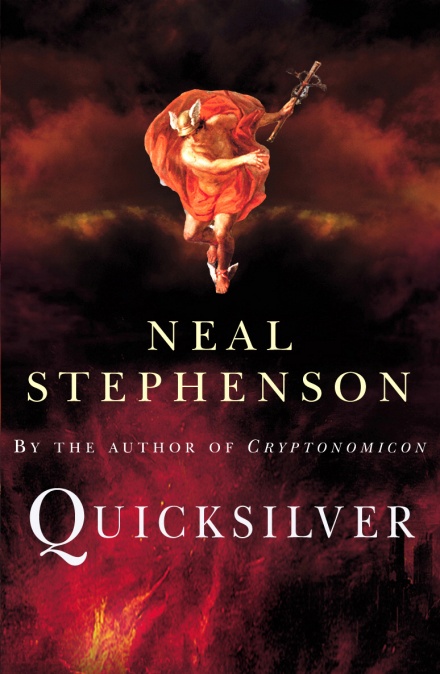
This Neal Stephenson dude likes to go large. Enormous books, with vast casts of characters, containing epic and sprawling storylines that tackle thorny and fundamental philosophical problems—all done in an irreverent and humorous way. Of all his fiction that I’ve read so far, Quicksilver seems the apotheosis of these tendencies,…
-
Indulging in the immediate future
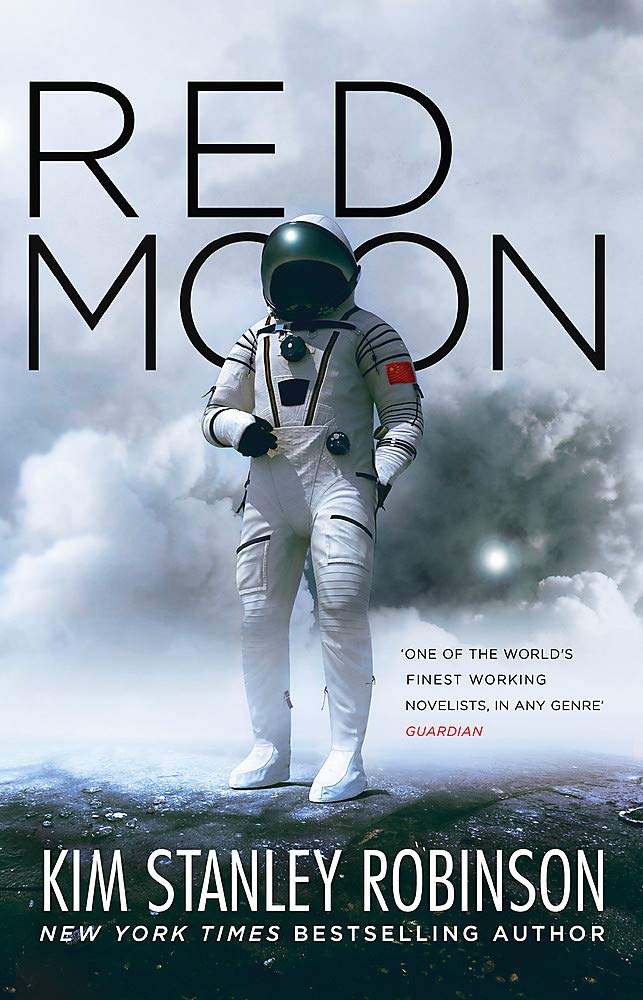
In Red Moon Kim Stanley Robinson turns his attention to the Earth’s satellite in much the same way that he has turned his attention to Mars and Antarctica, among other places. That is to say, with knowledge, rigour, and an unerring instinct for where the stories are. In many ways…
-
Mystery abides
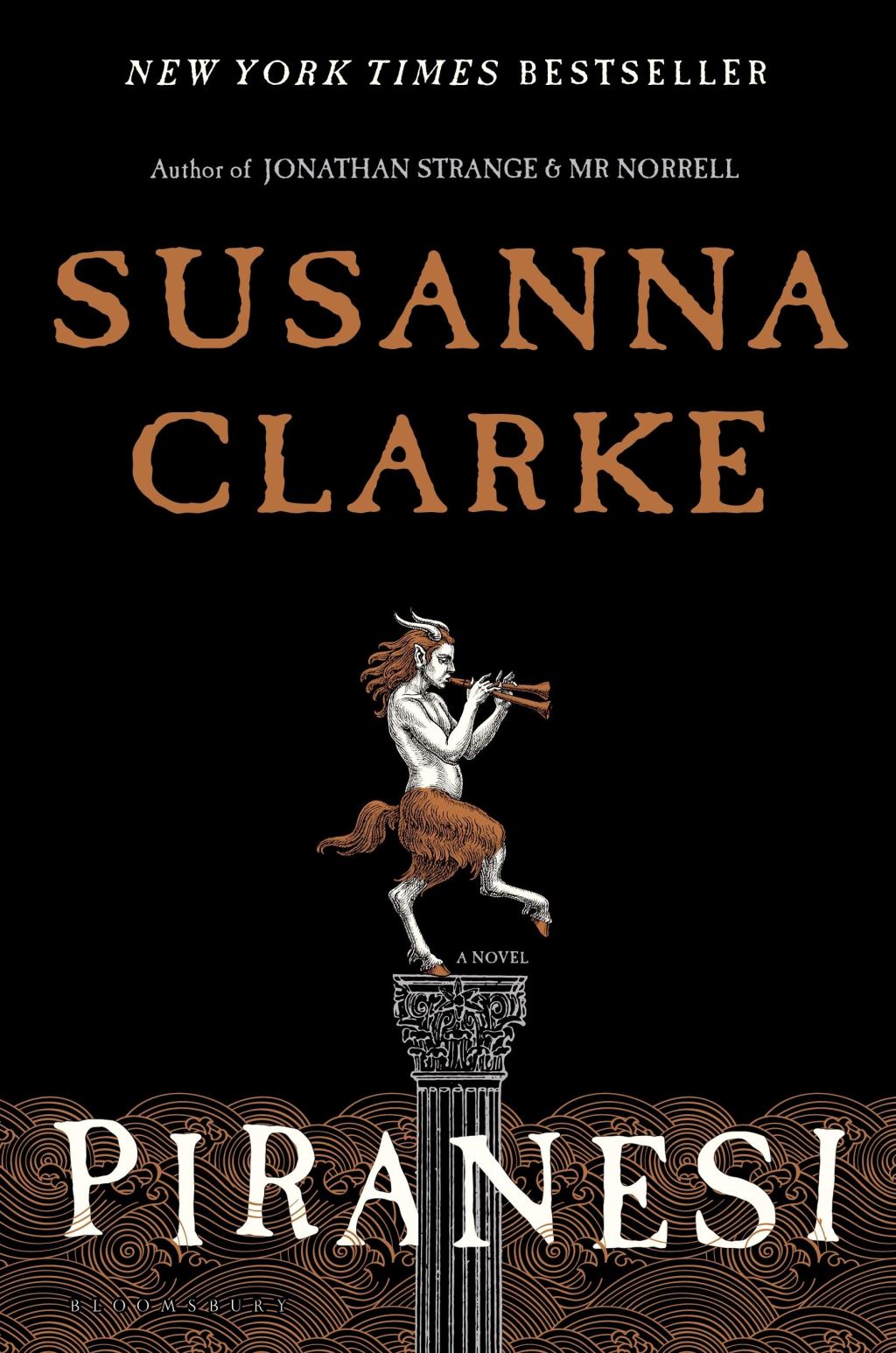
First-person narratives often use the grammatical device of the first-person pronoun to solicit the reader’s close identification with the narrator, without letting go of the privileges pertaining to a distanced, omniscient point-of-view. Such stories usually fail to elicit the immersion they are aiming at for me—which is not to say…
 Oliver Arditi