It says right there on the home page of my blog that I’m interested in worldbuilding. This is something, as you may have noticed, that a lot of fantasy and science-fiction writers talk about. It may be something that you do yourself, or you may be wondering what it is. You may think you know what it means, but not really know where to start. Perhaps you’ve heard different people using the term, and seeming to mean different things by it. So, what the hell is it?
In this article I’m going to try to offer a bit of clarity. I’ll say what it is I think that worldbuilding means, and then I’ll try to break it down into a set of components. What are the things you have to do in order to build a world? I’m going to look at these questions primarily from the perspective of secondary-world fantasy fiction, although I’ll use some examples from science-fiction as well, and I think you should find it easy enough to apply these principles to other genres.
Definitions of worldbuilding, or why you should care about Barnet
First off, lets make it clear that there are two, main related uses of the term ‘worldbuilding’. Although the term has historically been used largely to talk about fantasy and science-fiction, it’s also sometimes used to refer to the work of building setting in fiction generally. Even if your story is about the friendship between a solicitor and a window-cleaner in Barnet in 2011, it still takes place in a world, and you are still going to have to convince your reader that it’s real, and that your characters are a part of it. Every writer has to do this work, and although many may not think too hard about it, there will be consequences for that inattention—particularly if your reader happens to know something about the place or milieu that you’re writing about. The better you build your world, the more likely your readers are to buy in to your story.
The other definition of worldbuilding is the one I’m going to talk about. This is the fun version—making up an imaginary world, deciding whether it has dragons or starfighters, and deciding whether they’re called Viserion or X-Wings. But before we move on, I want to note one very important aspect of the first definition. You need to give your readers credit for knowing things about the world: if you set your story in Barnet, but don’t bother to find out anything about what Barnet is actually like, those readers that have been to Barnet may find it really hard to believe in your story. Or maybe you get Barnet right, but don’t bother finding out what life is like in a solicitor’s office. Again, you lose a certain proportion of your readers. This is why writers do research, and why most fiction writers try to get the things they write about more or less ‘right’. And now, let’s talk about imaginary worlds.
Making up worlds, or when to put more petrol in your horse
So, we’re really lucky that we’re setting our stories in made up worlds, because we don’t need to worry about any of that research stuff, right? Wrong! Just as some of your readers might have been to Barnet, some of them may have used a bow and arrow, sailed a boat, ridden a horse, or read something about the historical societies that likely provided the inspiration for your fictional ones. And even though none of your readers will have any hands-on experience of dragons, they may have enough experience of real-world animals that if you simply make it up as you go along, it might not ring true for them. Any one of those cases might only apply to a minority of readers, but add them all together, and it seems to me as though it might be worth thinking all of those things through just as carefully as if you were writing a story set in the everyday world.
I should come clean here, and point out that I’ve been left cold by some very popular fantasy books precisely because they didn’t sweat those details. Clearly, most other readers of those books didn’t mind. This may be related to the direction that I come at worldbuilding from. The first imaginary worlds I visited were J.R.R. Tolkien’s Middle-earth, Ursula K. Le Guin’s Earthsea and Frank Herbert’s Dune. All of those writers are extremely hot on the details—not in the sense that they go on and on about stuff (although arguably Tolkien is pretty heavy on the descriptive passages), but in the sense that their authors made sure they knew what they were talking about when they put a horse, or a sailing boat, or a knife-fight into their stories. You can pick holes in them, sure, but not many. After getting to know those literary worlds, I continued to explore through the medium of role-playing games.
Completeness and consistency, or ‘that elf is totally unrealistic!’
Now clearly, the worlds of a lot of games are pretty outlandish, and they can stretch the limits of plausibility, but worldbuilding for games requires a greater emphasis on completeness and consistency. Put simply, you need to fill in the blanks on the map, and make sure that the distances and travel times make sense, because you have no idea where the players are going to go. If you’re writing a story, your characters go where you send them, so you don’t have to make up the other places if you don’t want to. This principle extends beyond geography, to every other aspect of the imaginary world. My sense of what makes a good world was heavily influenced by the RPG sourcebooks I read as a kid, such as Greg Stafford, Rudy Kraft and Jennell Jaquays’s Griffin Mountain, and articles in White Dwarf, such as Paul Vernon’s ‘Designing a Quasi-Medieval Society for D&D’, many of which set a very high bar for the ‘realism’ of made-up worlds. I have to acknowledge that bar is not one that many fantasy writers are trying to jump over, and that it’s not one that most fantasy readers are thinking about either. However, it’s my belief that when an imaginary world does clear that bar, it has a greater sense of reality, a deeper magic, than a world that falls short, even if the writers and readers aren’t directly conscious of it.
The terms ‘completeness’ and ‘consistency’, along with ‘invention’, are used by the scholar Mark J.P. Wolf in his discussions of worldbuilding. Wolf is the leading scholar in what he calls ‘subcreation studies’, which is basically the academic study of worldbuilding. You don’t need to read his work to understand worldbuilding, but I’ve found him a useful source of ideas and terminology. Wolf says that to be believed by its audience, an imaginary world needs to display a sufficient degree of invention, completeness and consistency, and I’m inclined to agree with him.
Fantasy maps, or ‘how did we get to the Uttermost West by walking north?’
So, where to start? Start by drawing a map. Tolkien, the parent of all modern fantasy world-building, said that he ‘wisely started with a map, and made the story fit … The other way about lands one in confusions and impossibilities, and in any case it is weary work to compose a map from a story.’ (from The Letters of J.R.R. Tolkien, ed. Humphrey Carpenter). Put simply, if you don’t know exactly where your characters are, it’s going to be very hard to explain where they are to the reader.
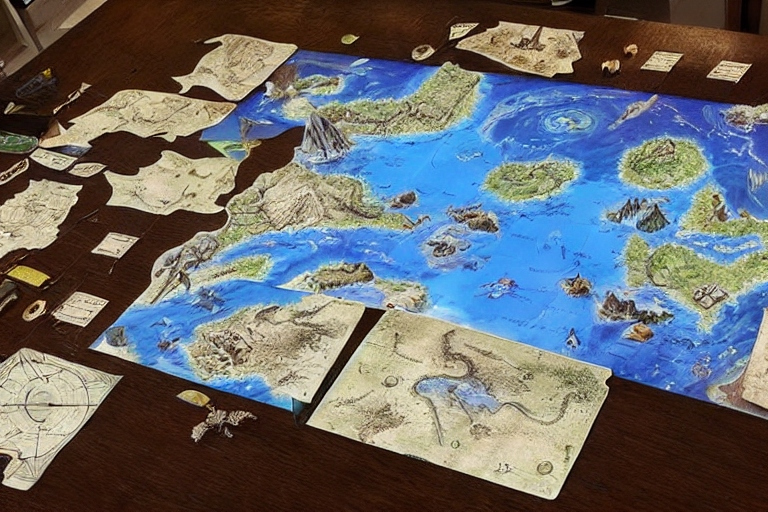
This doesn’t mean that your map needs to be beautiful, detailed, or realistic. It just needs to be functional: it needs to help you make sure that if Zarglethrop is to the north of Kranglepling in chapter 1, and Kranglepling is due east of Q’zkasimp in chapter 5, then Q’zkasimp isn’t northeast of Zarglethrop in chapter 11. Readers notice that stuff. Personally, I think drawing maps is enormous fun, and I could go into a great deal of detail on the topic—perhaps I’ll do so in a future article. For me, stories spring into existence almost of their own accord as landforms emerge from my pencil. It may be different for you, but I’d encourage you to try it, even if you don’t think you know how to draw. What’s the worst that can happen? You do need at least to work up some kind of a diagram—not every fantasy writer does so, I’m sure, but consistency and completeness will be a hundred times easier to achieve with the aid of a map.
Names and languages, from Cosybridge to Zarglethrop
Once you’ve drawn your map, or while you’re drawing it, you’re going to want to write some words on it. The world that you’re inventing is presumably going to feature some different countries, peoples, nations or ethnicities: these will also likely speak different languages. It’s probably a good idea to think about that before you start writing things on your map.
Languages in imaginary worlds is a topic that I’m particularly interested in, but for now I’m just going to sketch the basics. A good way to make your world come alive, is to give the place names of each region a distinctive flavour. This helps the reader to keep track of which country is which, and it also starts to do the important work of distinguishing the different cultures that are found in your world. The most obvious way to do this is to play it (literally) by ear: make things sound similar, re-use parts of words, make all the city names end in ‘-erch’, things like that. A more systematic method is to develop a ‘naming language’, as advocated by Mark Rosenfelder in The Language construction kit. It’s worth getting his book just for the chapter on naming languages, in which he explains how to go about it far more clearly than I can. Another common approach is to base your place names and imaginary languages on real-world languages. The most important thing is to give the matter some attention. In my opinion, it’s very obvious when a fantasy writer hasn’t really thought through the question of language, and for me that tends to make a world a lot less coherent and believable. For some exemplary linguistic worldbuilding in action, you should read Arkady Martine’s science-fiction duology A Memory Called Empire/A Desolation Called Peace.
Culture and society, or ‘how dare you let your horse sniff my cheese!’
I’m not advocating a strict order of development for the elements in your imaginary world. It’s likely you’ll have some well-developed ideas about what kind of story you want to tell, and therefore about the kinds of cultures that your characters come from, well before you get to this stage—and it’s quite likely that you’ll go back and forth between your map, your languages, and all the other elements, as each one reveals its implications for the others. But this is a nice neat way to arrange them for an article on worldbuilding.
So now you have a bunch of regions on your map with different sounding place names. What else is different about those regions? Are the people in one area really into horses, and those in the neighbouring region obsessed with cheese? What are the histories of these peoples, and how do they affect the way they are now? For example, in my world of Olnezea, one people is descended from horse nomads: in the narrative present, it’s over a thousand years since they lived in tents and moved from place to place, but that background shapes their customs, their social institutions ,their language, and even their cuisine. This is obviously another huge topic, but it’s one you need to think about. I’ve read a lot of epic fantasy that leans into baseline genre assumptions about pre-industrial societies, usually related more closely to D&D than to any historical sources, and it tends to ring a bit hollow for me. We’ve already established that I’m unusually finicky about this stuff, but I can’t see a downside to putting some distinctive cultural colour into your worldbuilding. It will help you to distinguish the different peoples in your world from one another, and to make your fantasy world unique.
Politics and power, or ‘why are we fighting, again?’
And now, you have a selection of regions on the map with linguistic and cultural differences. Those differences might drive conflict, and conflict is a motivating factor for most narrative, particularly in the fantasy genre. How are those cultures interacting? Which ones are dominant, and which ones are trying to get out from under? Which ones are having trouble accessing scarce resources? Perhaps I should have mentioned economics along with culture and society above, or perhaps I should be mentioning it now. However, the point of this article is not to offer a comprehensive picture of worldbuilding—that would really be no different than a comprehensive picture of the real world, and we clearly don’t have room for that!
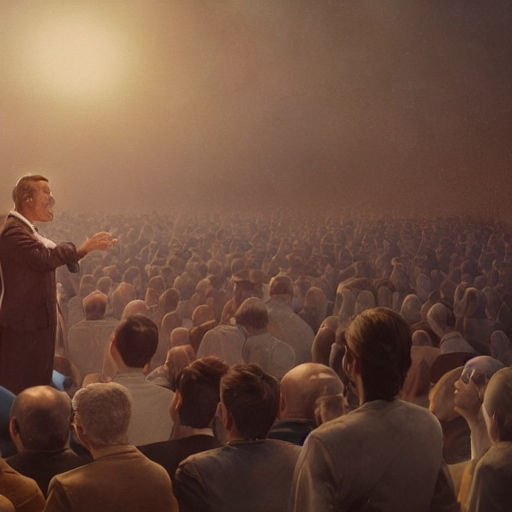
The most important thing about politics is that it mediates between all the things we’ve discussed already in this article, and the real meat (or nut cutlet) of what we’re trying to do here, which is telling stories. Not every possible story is about politics, but if your story features a war, or espionage, or an epic quest to save the good people from the bad people, then there are politics behind that, and you should be thinking them through. Do people who are into horses just naturally hate people who are into cheese? Or do the people who are into cheese just happen to be sitting on the richest tin deposits in the region? Or has the king of the horse people been possessed by a demon that wants to enslave the whole world, cheese-loving or otherwise? What are the factions within your societies? Who holds the power? Who wants the power?
Crafts and skills, war and peace
People in your world do things. Sure, I’m making an assumption here, but if they don’t it’s going to make for some pretty featureless stories! The ways in which they do things in your story matter. I talked about this at the outset—some of your readers may know a bit about the things that are done, whether those things are archery, baking, or space travel. There’s no good reason I can think of to exclude those readers from your world by having anything done in a completely implausible way. So, in order to avoid that, you may need to look into things like pre-modern warfare, traditional leather working, or orbital mechanics. I know not every writer bothers, and I am as willing as the next Trekkie to embrace Discovery’s mushroom drive, but I’d also like to argue that if you do your research, it will enhance the sense of reality that your story conveys, even to non-experts. And as we are already likely to be asking the reader to believe in magic and dragons, anything that enhances your world’s sense of reality is going to help, right?
The fantastic: magic, dragons and all the things
Clearly, a lot of what I’ve said can be applied to any kind of worldbuilding, any genre of speculative fiction. But there’s one element that is specific to fantasy, and that is the fantastic. What is it about your world or your story that makes it fantasy, rather than, say, alternate history, or science fiction? Is it just a pre-modern society on another world, or is there in fact something fantastical about it? Common examples of fantastical elements might be dragons, or magic, but there can be many others.
Whatever they are, you need to have some idea of how they fit into your world, and what effect they have on its cultures and societies. Once again, there are some default assumptions that you can fall back on. The whole genre of epic fantasy begins with writers that were once described as ‘Tolkien imitators’, people like Terry Brooks, whose successful Shannara series was one of the first in that vein. D&D, which is also heavily influenced by Tolkien, but also by his sword and sorcery contemporaries like Jack Vance, provides another baseline, for writers who don’t want to reinvent the wheel. A lot of entertaining and popular books have been built from those assumptions.
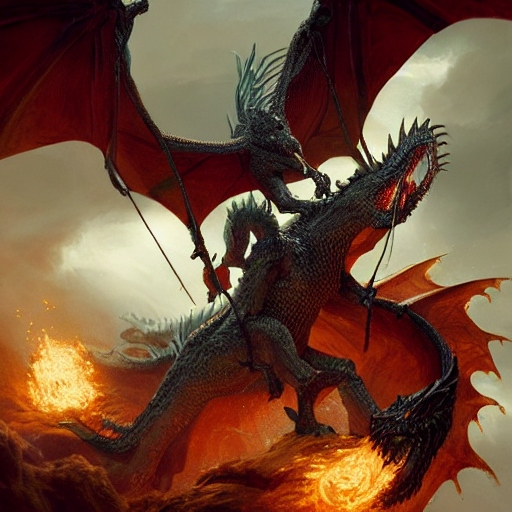
Many fantasy writers want to think more carefully about how the fantastic figures in their world, however, and develop something called a ‘magic system’. The advantage of this, for a storyteller, is that it sets out some parameters, which make it easier for your readers to understand what’s possible, and to be more impressed when something happens that seems to violate those assumptions. Without some consistency in the way you represent magic, it’s likely to end up feeling like whimsy. There’s clearly an audience for whimsical fantasy, but there’s probably a larger audience for stories set in worlds with some limitations. For me, the downside to magic systems, is that they can make a world’s magic into a kind of technology—the rules that govern the behaviours of magic become an alternate version of the rules of physics, and the magic users become some kind of engineer. Clearly there are trade-offs, and I’m not going into a great deal of detail here, but as with the other elements of worldbuilding I’ve looked at, my point is that this is something you need to think about, if you want your world to feel like a real place.
And that, right there, is the real magic. What could be more fantastical, than to put some words on a page, that enable those who read them to enter imaginatively into a completely invented world? That’s what worldbuilding is.
Further reading
Rosenfelder, Mark (2010) The Language construction kit. Yonagu Books. ISBN 9780984470006
Rosenfelder, Mark (2010) The Planet construction kit. Yonagu Books. ISBN 9780984470037
Wolf, Mark J.P. (2012) Building imaginary worlds: the theory and history of subcreation. ISBN 9780415631204
 Oliver Arditi